Skip to content
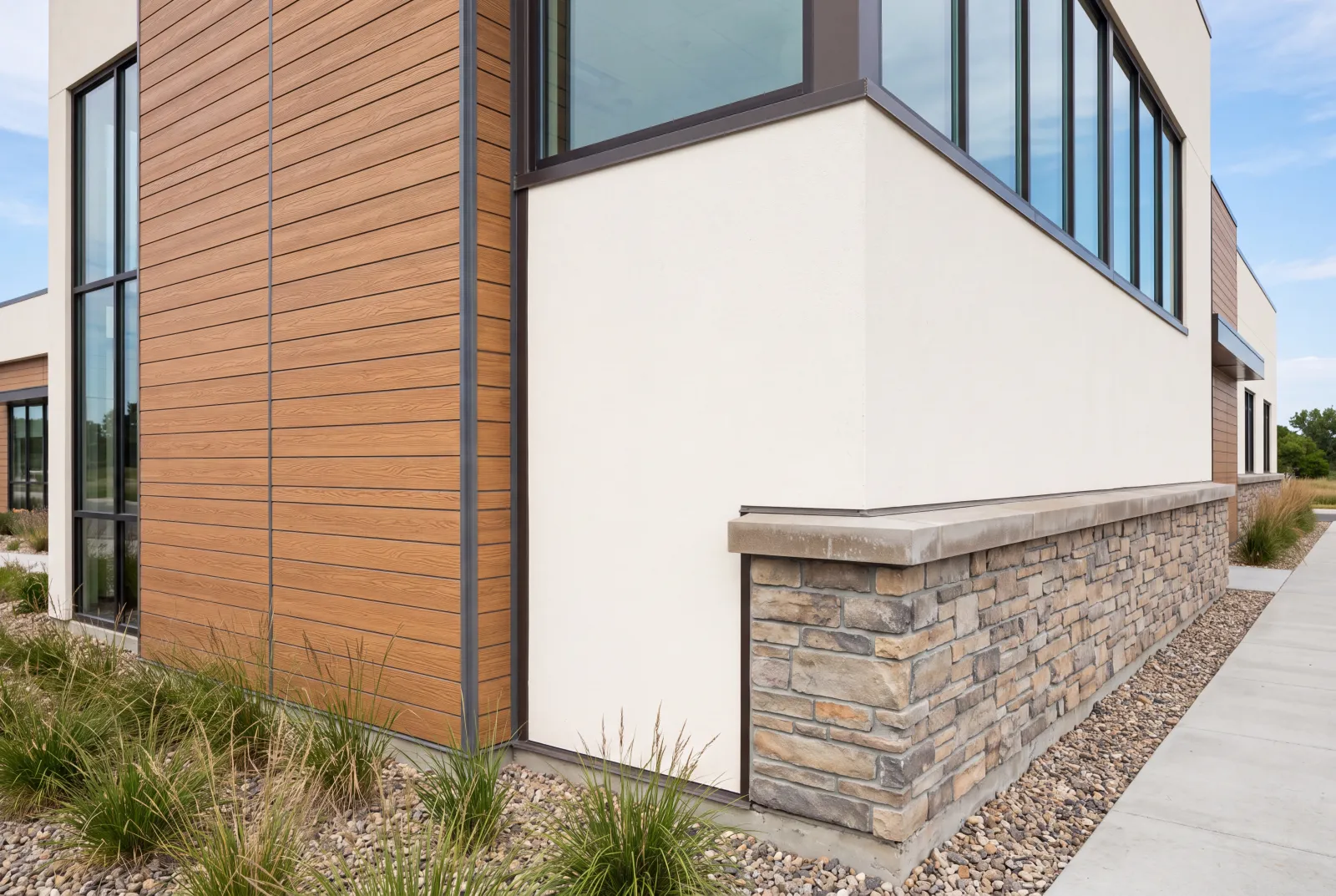
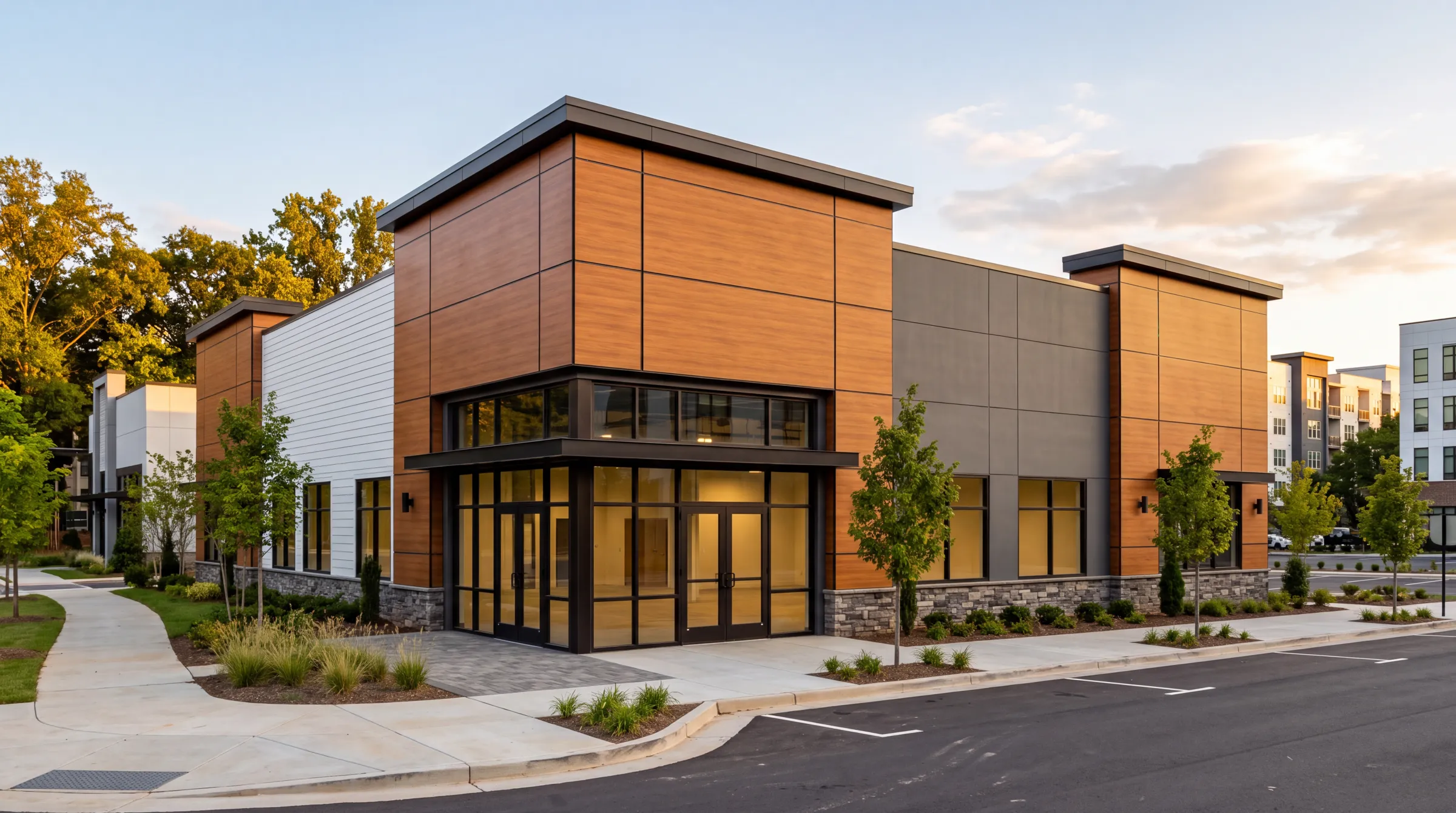
A modern commercial building clad in wood-look and charcoal fiber cement panels with white lap siding and a stone base
Illustration

Fiber cement · James Hardie & Nichiha

Fiber cement, straight lines that last.

James Hardie lap siding and Nichiha architectural wall panels, installed to the manufacturer’s specifications and tied cleanly into the EIFS and stone around them.

Two systems

Lap siding and wall panels.

Fiber cement is cement, sand and cellulose fiber pressed into boards and panels. It takes paint and texture like wood, but it won't rot, and it doesn't burn the way wood does.

James Hardie lap siding

Horizontal fiber cement boards and trim for retail, office and mixed-use buildings, set to a consistent exposure and installed to the manufacturer's specifications.

  • Lap siding and trim boards
  • Straight, even courses
  • Trim at corners and openings

Nichiha wall panels

Large architectural fiber cement panels in wood-look and smooth finishes, hung on concealed clips over rainscreen rails for a modern facade with crisp reveals.

  • Wood-look and smooth panels
  • Concealed clips across the field of the wall
  • Rainscreen cavity behind the panels

How a panel wall goes up

Rails, clips and clean reveals.

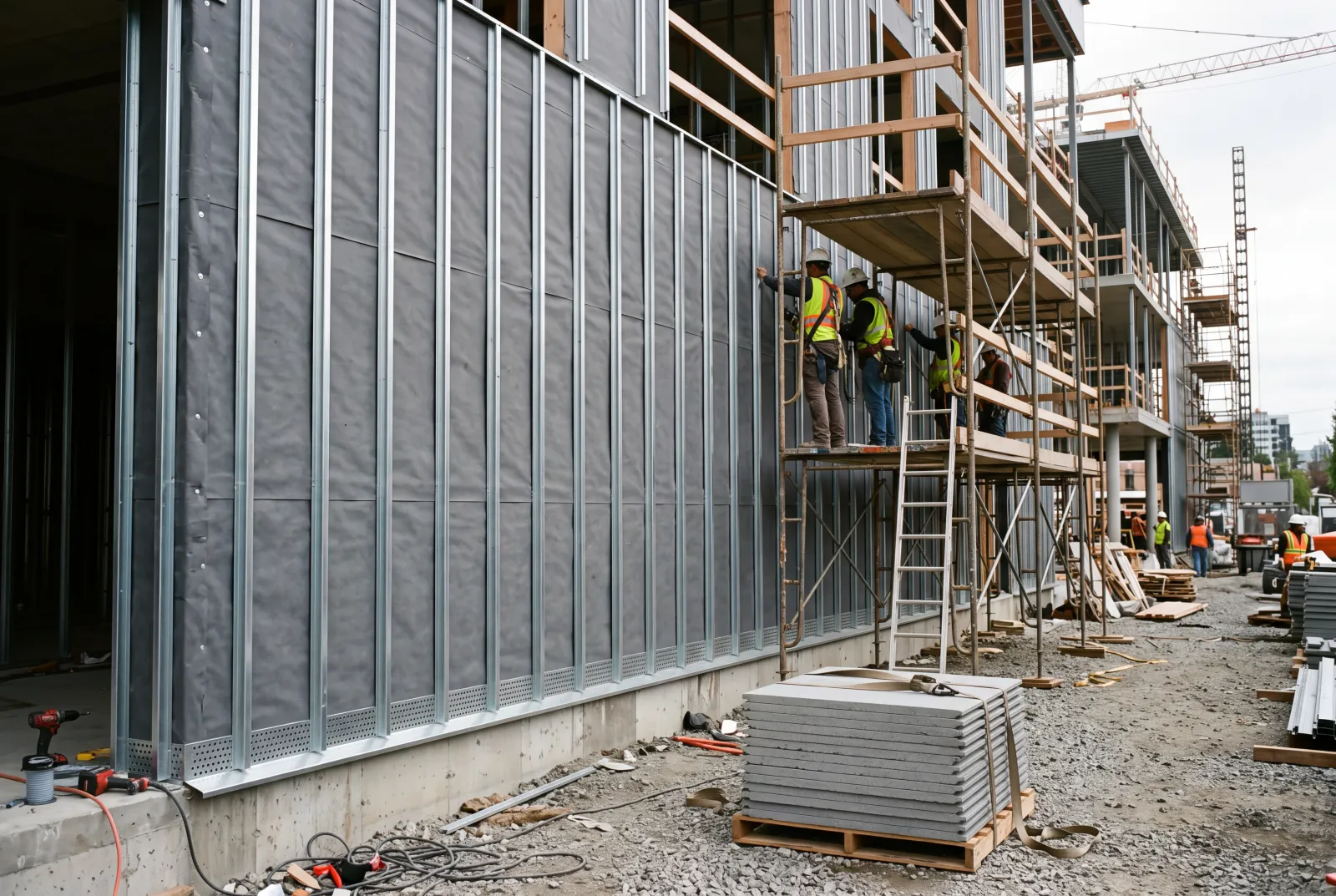
Vertical metal rails fastened over a weather barrier on a commercial wall, with panels stacked on a palletIllustration
01

Rainscreen rails

Over a continuous air and water barrier, vertical rails create a cavity behind the panels. Air moves through it, and water that gets past the panels drains down and out at the base. What is a rainscreen?

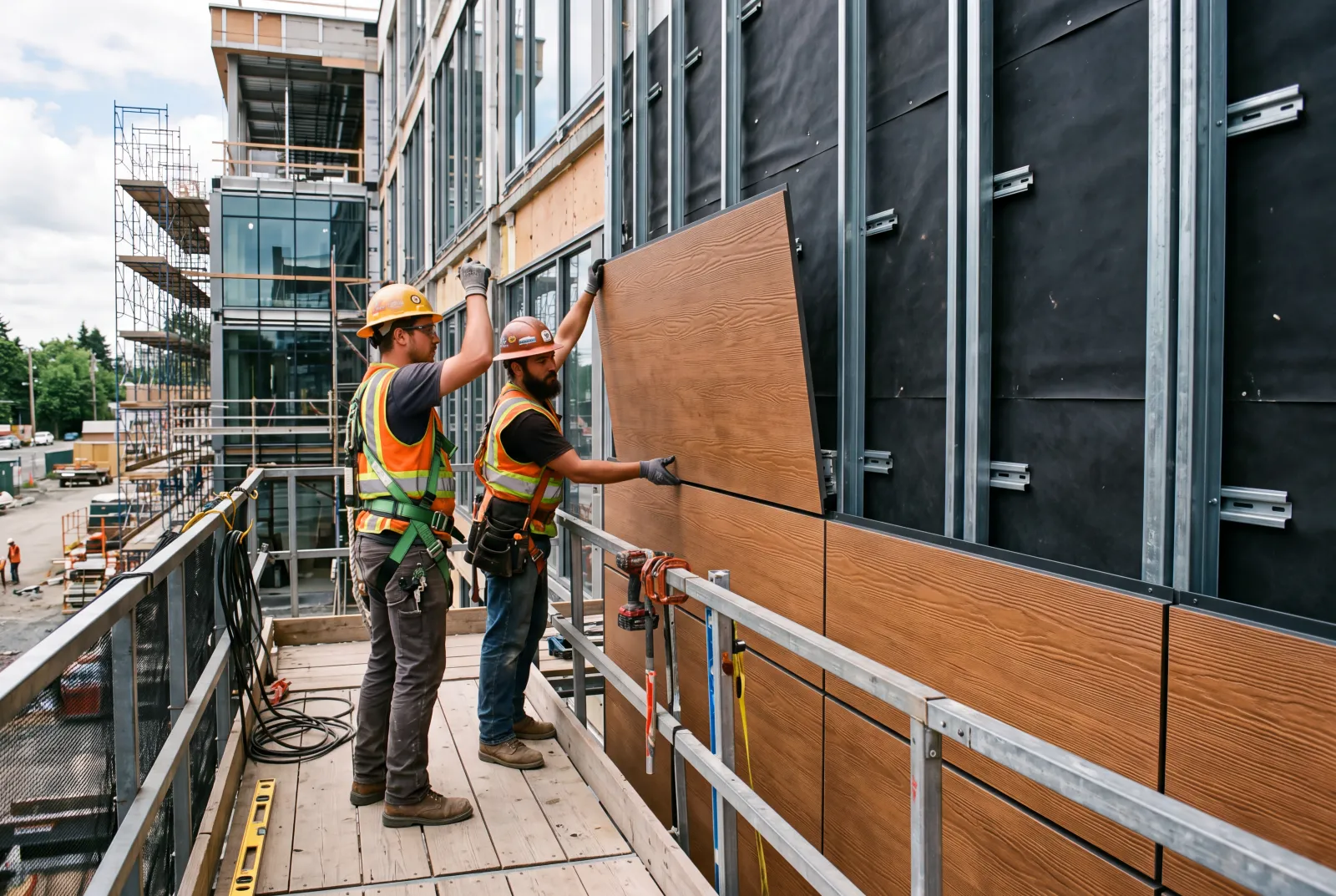
Two installers on a scaffold setting a wood-look fiber cement panel onto clips on the railsIllustration
02

Panels on concealed clips

Panels hang on clips fastened to the rails, so fasteners don’t show across the field of the wall. Joints are kept straight and even from one panel to the next.

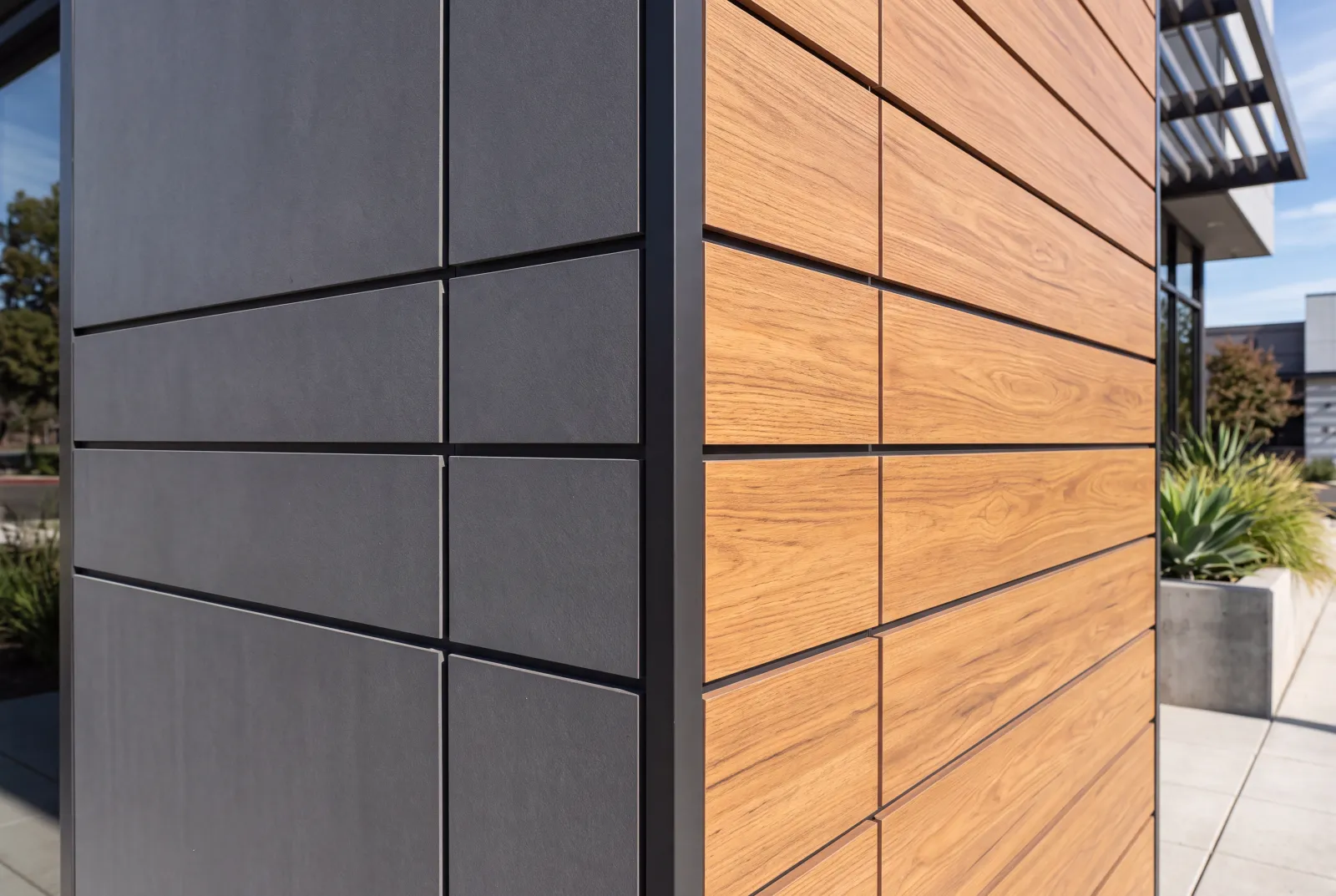
An outside corner where charcoal and wood-look fiber cement panels meet with straight reveal jointsIllustration
03

Corners and reveals

Corners, edges and transitions get trim and reveals detailed to the drawings — the lines people notice first.

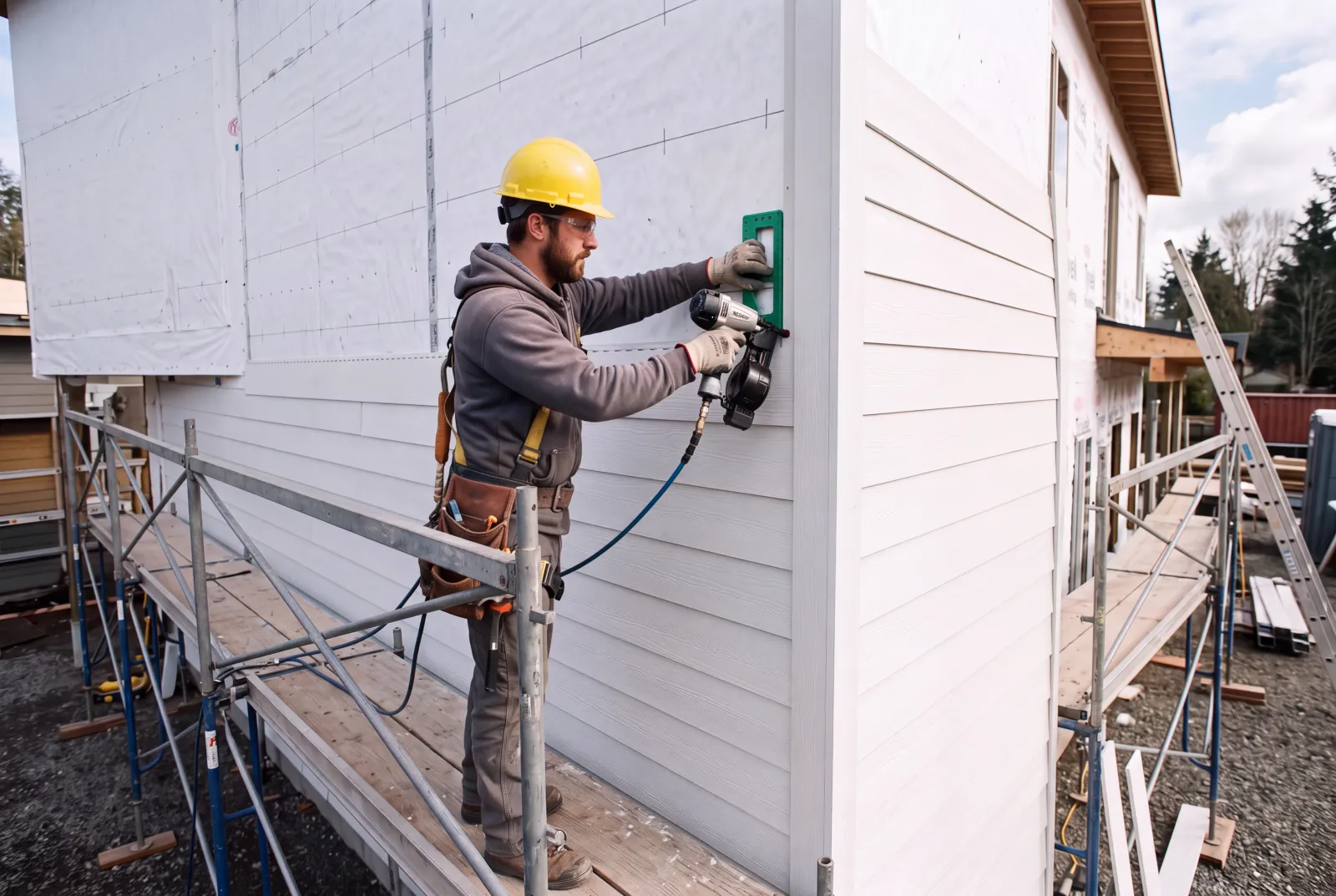
A carpenter fastening white fiber cement lap siding with a siding gauge, with trim at the cornerIllustration

Lap siding, course by course.

Boards go on over the air and water barrier, set to an even exposure with a siding gauge and fastened per the manufacturer's instructions. Trim boards finish the corners and openings.

  • Consistent exposure, wall to wall
  • Corner and opening trim
  • Installed to manufacturer specifications
A facade where wood-look panels, a white EIFS wall and a cultured stone base meet with clean jointsIllustration

One subcontractor for the whole facade.

Most commercial facades mix systems: panels at the entry, EIFS on the field of the wall, stone at the base. When one company installs all of them, the joints and flashings where systems meet are planned together instead of left between trades.

See our EIFS work

Our work

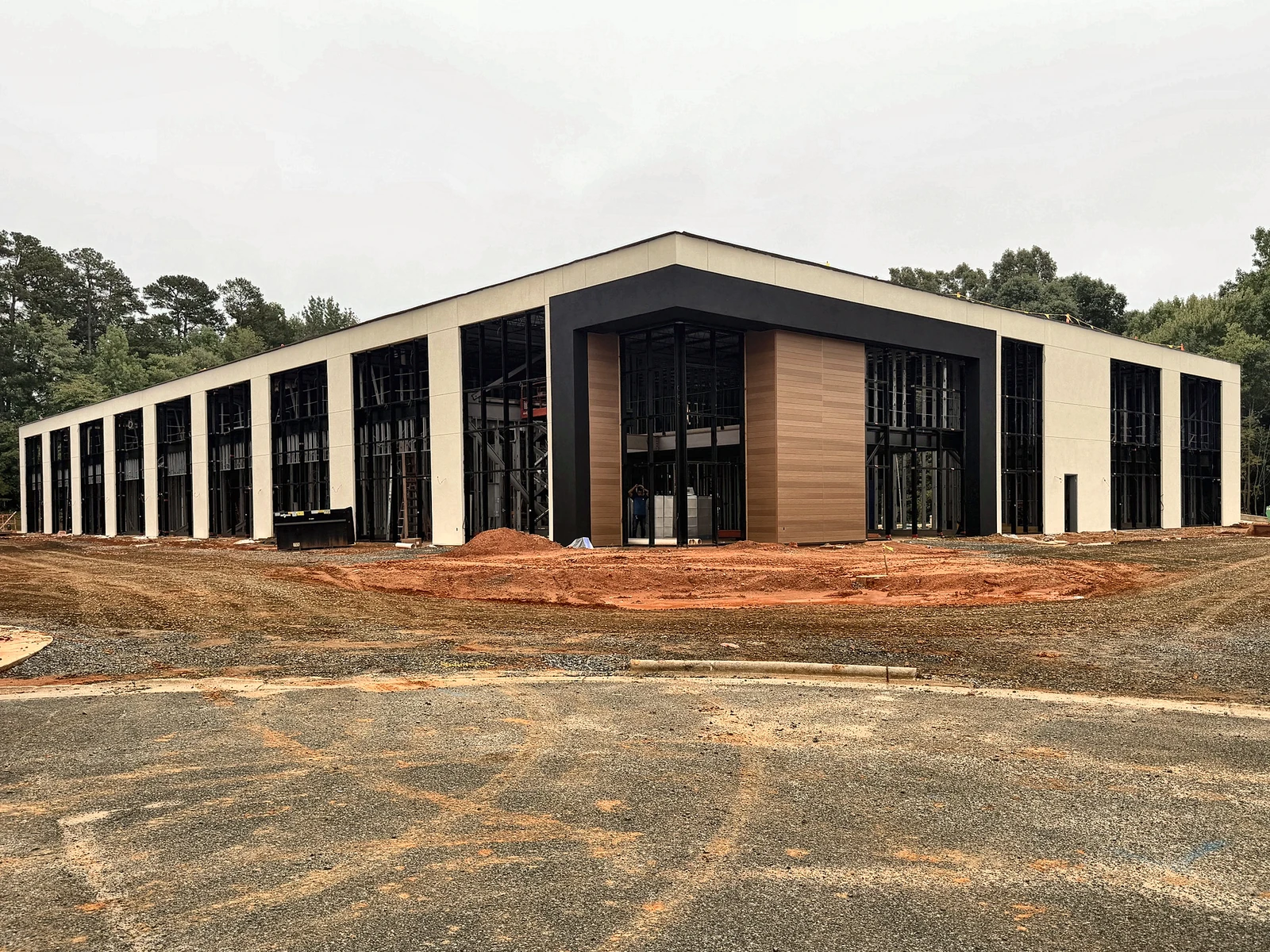
Fiber cement on JR Stucco projects.

Project photos show JR Stucco work.

FAQ

Fiber cement questions.

What's the difference between lap siding and panels?

Lap siding is horizontal boards that overlap, a classic look for retail and mixed-use buildings. Panels are large flat pieces with reveals between them, used for a modern, architectural facade. We install both, often on the same building.

What is a rainscreen?

A ventilated, drained gap between the cladding and the air and water barrier. It lets the wall dry and gives water a way out. Nichiha panels hang on concealed clips that hold them off the wall, often over furring rails, which creates this gap. Read more.

Do you install to the manufacturer's specifications?

Yes. Fiber cement siding and panels are installed to the manufacturer's published instructions and the project specifications.

Can you install fiber cement and EIFS on the same project?

Yes. That's where one subcontractor helps most: the transitions between systems are detailed and built by the same company.

Where do you work?

Across North Carolina, South Carolina, Georgia, Alabama and Tennessee, from our office in Charlotte.

Request a bid

Panels or siding on your next project?

Send the plans, specs and bid date. We reply with a proposal broken down by system.